The Extra Second That Nearly Broke the Internet — and Why Big Tech Wants It Gone Forever
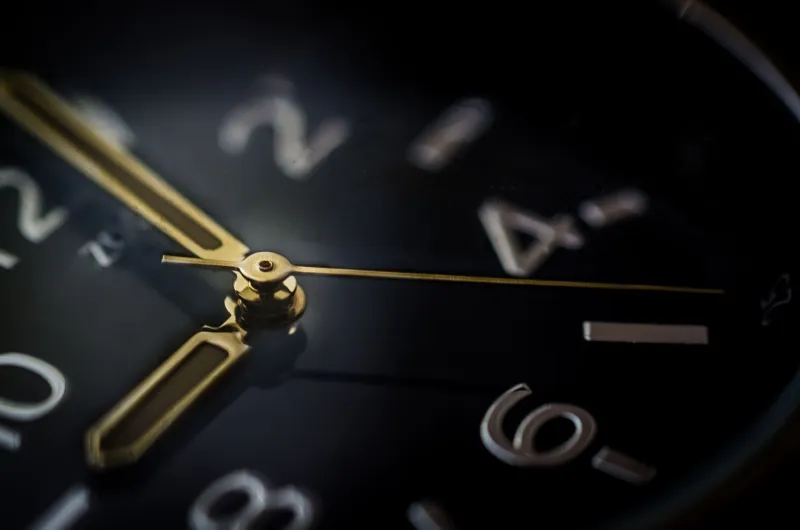
Somewhere in a lab in Colorado, a clock is so precise it won't lose a second in 300 million years. And every so often, humanity decides to mess with it anyway.
That's the strange situation we're in with the leap second — a single, sneaky extra second that gets added to Coordinated Universal Time (UTC) on rare occasions to keep our hyper-accurate atomic clocks from drifting away from the actual spin of the Earth. It sounds like trivia. It's not. It's a quiet, decades-long standoff between astronomers, tech companies, and the planet itself.
Why the Earth Can't Be Trusted to Tell Time
Here's the problem in plain terms: atomic time is perfect, and the Earth is not. Our planet's rotation speeds up and slows down by tiny amounts — influenced by tides, earthquakes, melting ice caps, and even the churning of Earth's molten core. Day length fluctuates by milliseconds. Atomic clocks don't care; they just keep ticking at a metronomic pace.
Since 1972, the fix has been the leap second. When atomic time and solar time drift about 0.9 seconds apart, the International Earth Rotation and Reference Systems Service calls an audible: at the end of June or December, clocks everywhere jump from 11:59:59 PM to 11:59:60 PM before rolling into the next day. That's right — 11:59:60 is a real time that has existed 27 times.
Astronomers love it. Software engineers, not so much.
The Night the Second Broke the Web
On June 30, 2012, a leap second was added at midnight UTC. For most Americans, it was a Saturday afternoon — a great time to be on the internet, and a terrible time for the internet to be on Reddit.
Reddit went down. So did Mozilla, LinkedIn, Yelp, and parts of Amazon Web Services. Qantas Airlines reportedly grounded flights when its Amadeus reservation system choked. The culprit? A single extra second that many computer systems had never been designed to handle.
The issue is that computers hate ambiguity. Most software assumes every minute has exactly 60 seconds. When second number 60 suddenly appears, some systems freeze, some crash, and some — the truly cursed ones — start spinning their internal clocks in circles trying to catch up.
In 2015, when the next leap second arrived, major tech companies didn't wait for disaster. Google, which had already been burned, pioneered a workaround called the "leap smear" — instead of adding one second at once, they stretched it out, subtly slowing their servers' clocks over a 24-hour window so the extra second oozes in without anyone noticing. Meta and Microsoft later adopted similar tricks. It's like easing your foot off the gas instead of slamming the brakes.
Why Scientists Are Fighting Over One Second
You'd think everyone would agree to just delete the thing. But in 2022, when the International Bureau of Weights and Measures voted to retire the leap second by 2035, the vote wasn't unanimous — and the holdouts had a point.
If we stop adding leap seconds, atomic time and solar time will slowly diverge. We're talking seconds over decades, then minutes over centuries. For your phone, nothing changes. For astronomers, satellite operators, and anyone whose software needs to point a telescope or aim a GPS satellite at a precise patch of sky, a growing gap between "clock time" and "Earth time" means doing math nobody wants to do.
There's also a philosophical wrinkle: noon is defined by the sun. Let the drift run long enough and, centuries from now, "midnight" could eventually land in broad daylight — technically. That's a problem for our very distant descendants, but it's a problem some scientists refuse to hand down.
Tech giants see it differently. For them, the leap second is a landmine planted inside every data center on Earth. Meta published a paper in 2022 calling it a "hazard" and pushing for its abolition. When Google, Amazon, and Microsoft all agree on something, you know it's costing them real money.
What Happens Now
The current plan: no more leap seconds after 2035, with no changes for at least a century after that. The drift problem is kicked down the road — deliberately. Scientists figure that in 100 years, computing will look so different that today's fix might be irrelevant anyway.
There's also an odd twist: thanks to a shift in Earth's rotation patterns, the planet has actually been spinning a touch faster in recent years, which means we've been flirting with the first-ever negative leap second — a second removed rather than added. That scenario would be even nastier for computers, since no one has ever tested for it. Timekeeping bodies have suggested we might skip the next adjustment entirely rather than go negative, which is its own kind of precedent.
The Takeaway
The leap second is a perfect little metaphor for modern life: a tiny seam where the messy physical world pokes through our clean digital one. We built a civilization on clocks so accurate they outshine the planet they're meant to describe — and now we're debating whether reality should conform to the clock, or the clock to reality.
So the next time your app hiccups on a Saturday night, take a moment. It probably isn't a leap second. But it's nice to know that sometimes, it genuinely is.