Why America Still Thinks in 98.6: The Case for the World's Loneliest Thermometer
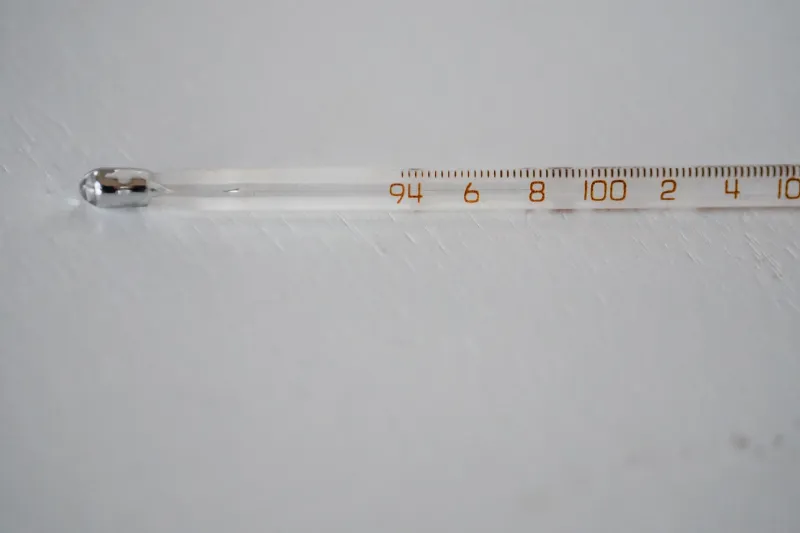
Ask an American what a normal day feels like and they'll tell you a number between 30 and 100. Ask someone in France the same question and you'll get something between 0 and 40. Same planet, same weather, completely different math. And after decades of international side-eye, the United States shows zero signs of budging.
We're one of just three countries — alongside Liberia and the Cayman Islands — that haven't officially adopted Celsius. That's not an accident. It's a choice. Maybe even a personality.
The Number That Lives in Your Body
Start with 98.6. Generations of Americans have memorized it as the temperature of a healthy human being. Doctors recited it. Mothers diagnosed fevers with it. It felt less like a measurement and more like a birthright.
Here's the funny part: even 98.6 was always a rounding error. A German physician named Carl Wunderlich crunched the numbers in 1868 and landed on 37°C, which converts to 98.6°F only because someone decided one decimal place was plenty. Modern research suggests average body temperature has actually drifted downward — closer to 97.5 for many people today. The number is a ghost. But try telling that to anyone who grew up with it.
Celsius has its own elegant anchor — 0 for freezing, 100 for boiling — but Fahrenheit accidentally optimized for something else: how air feels on skin. Between 0 and 100 degrees, you span the realistic range of outdoor human suffering in most of the country. That's not science. That's vibes. And vibes are stubborn.
The Metric Push That Died on the Highway
America came close, once. In 1975, Congress passed the Metric Conversion Act, declaring it official policy to move the country toward meters, liters, and Celsius. Road signs in metric popped up in a few states. Schools printed conversion charts. There was genuine momentum.
Then it all evaporated. The act had no teeth, no deadlines, and no funding to speak of. The Reagan administration quietly shuttered the U.S. Metric Board in 1982, and the whole project became a trivia answer. The most visible relic? A stretch of Interstate 19 in Arizona, still marked in kilometers, that locals have been fighting to change for decades.
The failed push left a scar, too. Ask around and you'll hear stories of a generation that grew up mid-conversion — fluent in neither system, suspicious of both. When your one attempt at change ends in confusion, you don't line up for round two.
What People Actually Say When You Ask Them
Polling on the subject is remarkably one-sided. Surveys consistently show a large majority of Americans oppose switching to metric, and temperature is often the hill they'd die on first. The reasoning is rarely scientific. It's sentimental.
There's the homeowner whose thermostat is a negotiation conducted entirely in seventies. The grandfather who gauges a cold snap by whether it dips into the twenties. The cook who knows 350 for cookies and 165 for chicken the way other people know their phone number. These numbers aren't units — they're shorthand for lived experience.
There's also a practical wrinkle nobody outside the trades talks about: the estimated cost of full metric conversion runs into the hundreds of billions once you count machinery, signage, labeling, and retraining. American manufacturing built its tooling in inches and degrees. Switching means rewriting the muscle memory of an entire economy.
The Identity Problem
Here's where it stops being about thermometers. Measurements are one of those invisible cultural layers — like driving on the right or tipping at restaurants — that feel natural until you realize they're choices. Holding onto Fahrenheit is, for a lot of people, a small act of sovereignty. The world standardized; we didn't. Somehow that reads as character rather than inconvenience.
And honestly, the inconvenience is mostly one-directional. Americans mostly talk to Americans about weather. The cost of our stubbornness lands on scientists, engineers, and anyone who has ever Googled "what is 30 degrees Celsius in Fahrenheit" mid-conversation with a foreign colleague.
Every Number Tells a Story
At 1280816 Hub, we spend a lot of time thinking about what numbers mean to people, and Fahrenheit might be the best example going. It's a system that survives not because it's better, but because it's ours — folded into recipes, small talk, and the memory of every summer heat wave.
Would Celsius be cleaner? Probably. Would it make us more like everyone else? Definitely. And if the last fifty years have proven anything, it's that Americans will happily be confused by their own numbers before they'll give up the ones that feel like home.
So the next time a weather app offers to switch you to Celsius, know that you're not just picking a unit. You're picking a side in a very old, very quiet argument — one that 98.6 percent of the country has already decided.