You Are Where You're From: The Hidden Life of American Area Codes
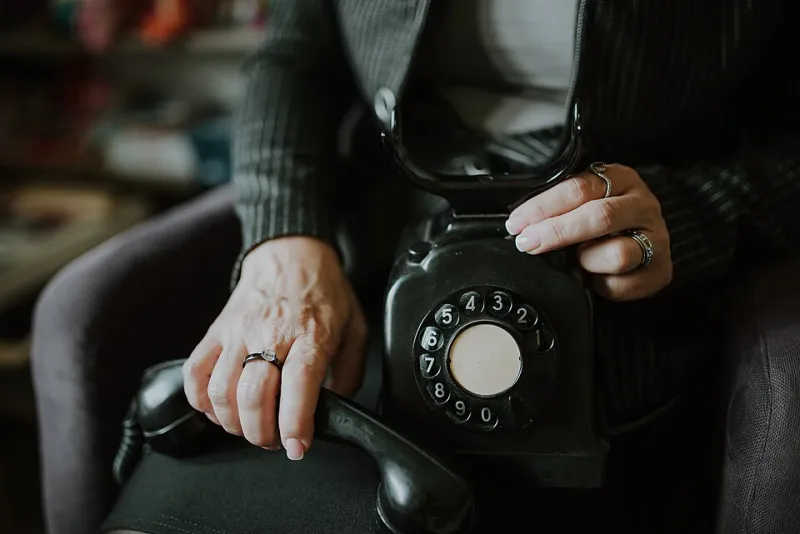
Photo: Shixart1985, CC BY 2.0, via Wikimedia Commons
Somewhere between the invention of caller ID and the moment everyone started carrying their phone number across state lines like a piece of luggage, the area code quietly became one of the most loaded three-digit combinations in American life. It wasn't just a routing mechanism. It was a signal — of where you lived, what that meant, and sometimes, whether people took you seriously.
We're a site that believes every number has a story. And area codes? They've been telling stories since 1947.
The System That Started It All
The North American Numbering Plan, or NANP, launched in 1947 as a joint project between AT&T and Bell System engineers trying to solve a genuinely complicated logistical puzzle: how do you build a unified dialing system across an entire continent? The answer was elegant in its simplicity — divide the territory into numbered zones, assign each one a three-digit code, and let the network sort out the rest.
The original code assignments weren't random, but they weren't exactly glamorous either. The logic was partly mechanical. Rotary phones took longer to dial higher numbers, so the most populous areas — the ones with the most outgoing call volume — got codes with lower digits that dialed faster. New York got 212. Los Angeles got 213. Chicago got 312. It was efficiency, not prestige. But prestige showed up anyway, uninvited, and it never really left.
212: The Original Status Symbol
Ask anyone who grew up in New York before the 1990s, and they'll tell you: a 212 number meant something. It meant Manhattan. Not the outer boroughs, not New Jersey trying to pass itself off as metro New York — actual Manhattan. By the time 718 spun off to cover Brooklyn, Queens, the Bronx, and Staten Island in 1984, the split had already become culturally legible. Two-one-two was old money, old media, old power.
Businesses fought to keep 212 numbers. People paid premiums for them. Even after cell phones untethered phone numbers from geography entirely, 212 retained a kind of legacy prestige — the numerical equivalent of a corner office with a view.
This is the weird alchemy of area codes: a number assigned by engineers for routing efficiency became a social credential. Nobody planned that. It just happened, the way most cultural meaning happens — gradually, then all at once.
Hollywood's Golden Digits: 310 and 818
Los Angeles is a city that has always taken its own mythology seriously, and its area codes reflect that perfectly. When 310 split from the original 213 in 1991, it carved out the Westside — Beverly Hills, Santa Monica, Malibu, Culver City. In a city where your zip code is basically a personality test, 310 became the phone number equivalent of a good table at Nobu.
The entertainment industry latched onto it immediately. Talent agencies, production companies, managers — having a 310 number was part of the costume. Meanwhile, 818 covered the San Fernando Valley, which includes a huge chunk of the actual working film and TV production infrastructure. The irony is thick: the people making Hollywood often had Valley numbers, while the people selling Hollywood waved their 310s around like business card accessories.
Then came 323, which absorbed central LA including Hollywood itself, and the whole geography got even more complicated. But the social meanings? Those stuck around, even as the technical reality shifted underneath them.
Regional Codes and the Towns That Wore Them
It's not just the major metros where area codes developed personalities. Across the country, three-digit combinations became shorthand for entire ways of life.
404 is Atlanta — specifically, Atlanta's rise as the capital of Southern hip-hop culture. The number shows up in lyrics, in business names, in the kind of casual civic pride that turns a routing code into a rallying cry. When Atlanta artists rep "the 404," they're not talking about telephone infrastructure. They're talking about an identity.
504 is New Orleans in the same way — a city with such a specific, irreplaceable culture that its area code functions almost like a flag. After Hurricane Katrina, keeping a 504 number became, for many displaced residents, a small act of resistance. A refusal to let geography erase belonging.
Out in the Midwest, codes like 515 (Des Moines), 316 (Wichita), and 701 (all of North Dakota) carry a different kind of weight — quieter, less flashy, but no less real to the people who grew up with them. There's a particular brand of Midwestern pride in an area code that doesn't need to announce itself.
The Smartphone Shuffle and What Got Lost
Here's where things get a little melancholy. The smartphone era essentially broke the geographic contract that made area codes meaningful. People move from Atlanta to Seattle and keep their 404 number. New Yorkers relocate to Austin and hold onto their 212 like a security blanket. The number no longer tells you where someone is — just, maybe, where they're from.
For younger generations, area codes have become almost purely nostalgic markers. A Gen Z kid in Los Angeles might have a 614 Columbus area code because that's where their parents were when they got their first family plan. The code means Ohio to exactly nobody involved.
And yet — the cultural residue remains. 212 is still cool in a way that 646 never quite achieved. 310 still reads as a certain kind of Los Angeles aspiration. The meanings outlasted the mechanism, which is kind of beautiful when you think about it.
Every Number Has a Hometown
At 1280816 Hub, we spend a lot of time thinking about what numbers actually do in people's lives — how a string of digits can carry memory, identity, status, and story all at once. Area codes are a perfect case study.
They started as a purely technical solution. They became cultural geography. And now, in the age of number portability and eSIMs, they're turning into something like a personal history — three digits that tell you not where someone is, but where they came from, and maybe a little bit about who they decided to be.
Next time you see an unfamiliar area code pop up on your screen, take a second before you decide whether to answer. That number has a whole life behind it.