Six Numbers, One Ticket, A Completely Different Life
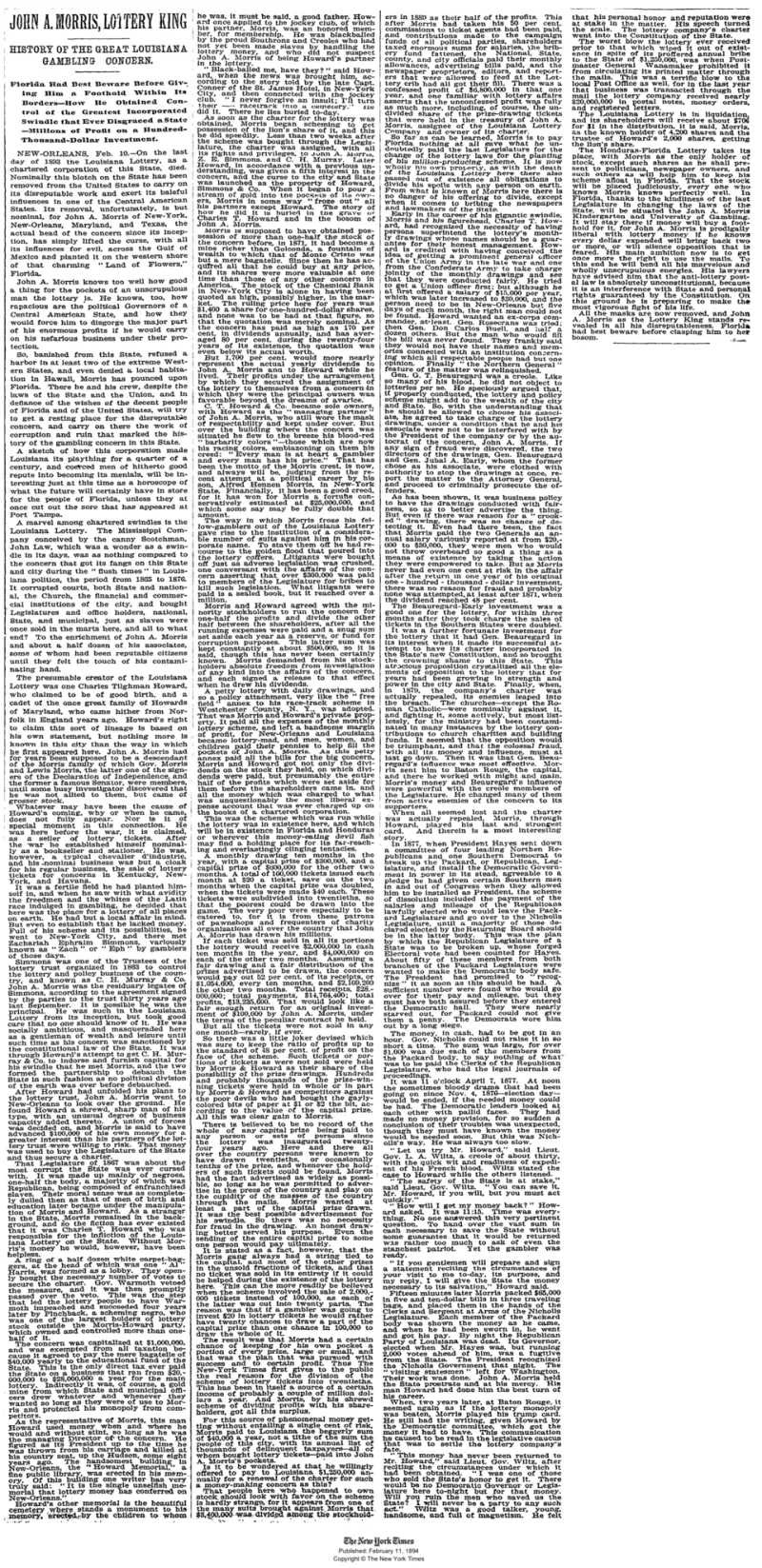
Photo: AnonymousUnknown author, Public domain, via Wikimedia Commons
There's something almost poetic about a lottery ticket. It's a tiny slip of paper — barely worth the ink on it — until suddenly, against all statistical reason, it isn't. For most players, those numbers mean nothing more than a few minutes of hopeful daydreaming. But for a select few Americans, a specific combination of digits became the dividing line between a regular Tuesday and the rest of their lives.
At 1280816 Hub, we're obsessed with the idea that every number tells a story. And few numbers carry more emotional weight than the ones printed on a winning lottery ticket.
Birthday Math and the Numbers We Trust
Ask any lottery veteran how they pick their numbers, and birthdays come up almost immediately. It's deeply human — we assign meaning to dates that marked our arrivals, our parents' lives, our kids' first days on earth. Statistically, this creates a funny quirk: numbers 1 through 31 get played way more often than higher ones, simply because calendars top out at 31.
Take the story of a Pennsylvania couple who won a Powerball jackpot in the mid-2000s by sticking with a combination built entirely around family birth years and anniversaries. The wife had been playing the same set of numbers for over a decade. When their numbers finally hit, she reportedly sat completely still for almost a full minute before saying anything. Those numbers weren't random to her — they were essentially a family portrait compressed into six digits.
This is the thing about lottery wins that doesn't get talked about enough: the numbers themselves become artifacts. Winners describe an almost eerie permanence to them. You don't forget the sequence that changed your life. Ever.
The Quick Pick Paradox
Here's where it gets interesting. A significant portion of major jackpot winners — some estimates put it north of 70% — didn't choose their numbers at all. They let the machine do it. The so-called "Quick Pick" is statistically just as likely to win as any human-chosen combination, and yet there's a fascinating psychological gulf between the two outcomes.
Winners who chose their own numbers often describe a sense of inevitability — like those digits were always going to come in. Quick Pick winners, on the other hand, frequently report a kind of dizzying randomness, a feeling that the universe just reached down and tapped them on the shoulder for no particular reason.
A retired teacher from Ohio who won a multi-state jackpot through a Quick Pick described it this way: "I didn't pick those numbers, so they didn't mean anything before. But now? I couldn't tell you what they are without looking, and somehow that feels right. It was just luck. Pure, dumb luck."
Contrast that with a Virginia man who had played 4-8-15-16-23-42 — yes, the numbers from Lost — every single week for years before eventually winning a smaller but still life-changing jackpot. He knew those numbers cold. They lived in him. The win felt, in his words, "like something that was supposed to happen."
Do Certain Numbers Actually Win More?
Lottery commissions publish draw histories, and number-crunchers love to pore over them. The honest answer is: over a truly long run, every number should appear roughly the same number of times in a genuinely random system. But in the short and medium term? Patterns emerge that feel real, even when they're just statistical noise.
Numbers like 23, 38, and 44 have appeared frequently in Powerball historical draws over certain multi-year windows, which is enough to spawn entire "hot numbers" subcultures online. Forums, spreadsheet-sharing communities, YouTube channels — there's a whole ecosystem built around the idea that past draws can predict future ones.
Mathematicians will tell you that's nonsense. Each draw is independent. The balls don't remember last week.
But here's the thing: humans aren't playing the math. They're playing the story. And that story has a number in it that feels right.
The Psychology of the Lucky Number
America has always had a complicated relationship with luck. We're a country that simultaneously believes in hard work as the path to success and keeps casinos running 24 hours a day. The lottery sits right at that intersection — a small ritual acknowledgment that sometimes fate just decides things.
Researchers who study gambling behavior note that lottery players often develop genuine emotional attachments to their numbers over time. Abandoning a long-played set feels risky — not because of any rational calculation, but because of the sunk-cost feeling that "these numbers are due." The gambler's fallacy dressed up in birthday candles and anniversaries.
And yet, when those numbers finally do hit, the emotional payoff is enormous — not just financially, but psychologically. The narrative writes itself: I believed, I stayed faithful, and I was rewarded. It's practically a folk tale.
What Winners Actually Do With the Memory
Perhaps the strangest part of big lottery wins is what happens to the numbers afterward. Some winners retire them, never wanting to dilute the magic. Others keep playing them, superstitiously or sentimentally. A few have had their winning combinations tattooed, framed, or engraved.
One woman from Illinois who won a major jackpot in the early 2010s reportedly still writes her winning numbers on a small card she keeps in her wallet — not to play again, but as a reminder. "Those numbers are part of my life story now," she told a local newspaper at the time. "They're as much a part of me as my kids' names."
That's the lottery at its most human. Strip away the jackpot amounts and the press conference photos, and what you're left with is a person whose life got split into before and after — and six numbers sitting right at that seam.
At 1280816 Hub, we think about numbers like that a lot. Every sequence carries weight if you let it. Most of the time, those six digits on your ticket are just noise. But every once in a while, they're the beginning of an entirely different chapter.