One Number Rules Your Entire Body — And Most Americans Are Ignoring It
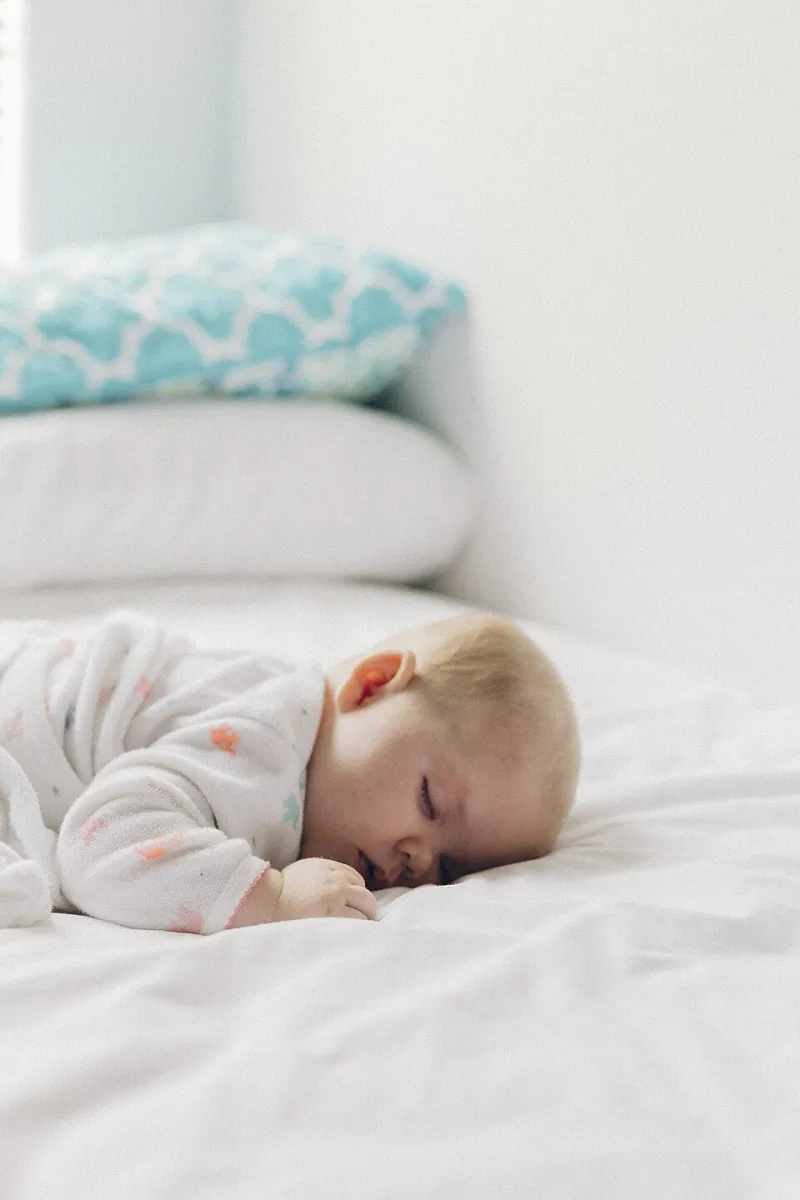
Photo: Dakota Corbin thedakotacorbin, CC0, via Wikimedia Commons
Here's a number worth sitting with: 24. Not 24 hours of Netflix. Not a 24-pack from the grocery store. We're talking about the 24-hour biological clock ticking inside every single cell of your body right now — the circadian rhythm — and the growing body of evidence suggesting that most Americans are living in open rebellion against it.
The crazy part? This clock didn't come with an off switch.
What the Number 24 Actually Means to Your Biology
The term "circadian" comes from the Latin circa diem, meaning "around a day." Scientists have known for decades that humans — along with basically every other living thing on Earth — operate on a roughly 24-hour internal cycle. But "roughly" is doing a lot of work in that sentence. Your personal clock might run closer to 23.8 hours or 24.5 hours, depending on your genetics. That fraction of a difference is part of why some people are natural early risers and others feel genuinely tortured by a 7 a.m. alarm.
What's remarkable is how total this clock's influence is. It doesn't just regulate when you feel sleepy. It governs your core body temperature, hormone production, immune response, metabolism, and even how quickly your DNA repairs itself. Mess with the 24-hour rhythm long enough, and you're not just tired — you're setting off a chain reaction that touches nearly every system in your body.
Dr. Charles Czeisler, a sleep researcher at Harvard Medical School, has spent much of his career documenting what happens when humans fight the clock. His work — along with research from institutions like the Salk Institute and the University of California San Diego — paints a picture that should make every night-owl office worker a little uneasy.
America's War on Its Own Clock
Let's be honest: the United States is not exactly a circadian-friendly country. We glorify hustle culture, run on caffeine, and have built an entire economy around 24/7 availability. Shift workers — nurses, factory employees, truck drivers, emergency responders — make up roughly 15 to 20 percent of the American workforce. These are people whose jobs actively require them to work against their biological programming.
But it's not just shift workers getting wrecked. The average American adult sleeps about 6.8 hours per night, well below the 7-to-9 hour range that sleep scientists consistently recommend for adults. And the quality of that sleep is increasingly compromised by something most of us carry to bed: our phones.
Blue light from screens suppresses melatonin — the hormone your brain releases to signal that nighttime has arrived. Every time you scroll Instagram at 11 p.m., you're essentially sending your internal clock a memo that says, it's still afternoon, buddy, stay alert. The clock doesn't argue. It just delays the process, pushing your sleep window later and later.
This phenomenon even has a name: social jet lag. It's the gap between when your body wants to sleep and when your schedule forces you to wake up. Researchers at Ludwig Maximilian University in Munich have estimated that over two-thirds of the population suffers from some degree of social jet lag — and that even an hour of misalignment is associated with higher rates of obesity, depression, and cardiovascular disease.
Why Actual Jet Lag Hits So Hard
If you've ever crossed multiple time zones and felt like your brain was wrapped in wet cotton for three days, you've experienced what happens when the external world and your internal 24-hour clock get violently out of sync. Jet lag isn't just tiredness — it's a genuine physiological collision between your biology and your geography.
Your circadian clock is anchored primarily by light. Specifically, specialized cells in your retinas detect light and send signals to a tiny region of the brain called the suprachiasmatic nucleus (SCN), which acts as the master pacemaker for your entire body. When you fly from New York to Los Angeles, that's only a three-hour shift — annoying but manageable. Fly from New York to Tokyo, and you're asking your SCN to recalibrate a 14-hour difference. It can only shift by about one to two hours per day. Do the math: that's a week-plus of your body being fundamentally confused about what time it is.
The direction matters, too. Traveling east is harder than traveling west for most people because it requires advancing your clock — essentially asking your body to start the day earlier than it wants to. Going west lets your clock delay, which feels more natural to most human biology. Frequent flyers and flight crews know this instinctively.
The Productivity Peak You Probably Don't Know About
Here's where the 24-hour number gets genuinely useful. Research suggests that most people hit their peak cognitive performance — the window where focus, working memory, and analytical thinking are firing on all cylinders — somewhere between mid-morning and early afternoon. For a typical person on a conventional schedule, that's roughly 10 a.m. to noon.
Athletic performance peaks later in the day, typically between 2 p.m. and 6 p.m., when muscle strength, reaction time, and cardiovascular efficiency are at their highest. This is why world records in track and field are disproportionately broken in the late afternoon.
The lowest point — the infamous post-lunch slump — isn't caused by your sandwich. It's a built-in dip in alertness that your circadian rhythm schedules around 2 to 3 p.m. Many cultures (Mediterranean countries, parts of Latin America) have historically accommodated this with a midday rest. In the United States, we mostly just pour another cup of coffee and power through.
Can You Actually Reset Your Clock?
The good news is that the 24-hour clock is responsive to intervention. Light is the most powerful tool — getting bright, natural light within the first hour of waking up sends a strong signal to your SCN that the day has started. Evening light management matters just as much: dimming overhead lights and putting screens away an hour before bed can meaningfully shift melatonin production back to where it belongs.
Consistency is the other big lever. Your clock loves routine. Going to bed and waking up at the same time — yes, even on weekends — reduces social jet lag and makes it easier to fall asleep and wake up without feeling like you've been hit by a truck.
Timed eating is an emerging area of research too. When you eat appears to influence your metabolic clock, separate from (but related to) your sleep-wake cycle. Eating most of your calories earlier in the day and finishing dinner a few hours before bed seems to support better metabolic health, according to research from the Salk Institute's Dr. Satchidananda Panda.
One Number, Millions of Stories
At 1280816 Hub, we're kind of obsessed with what numbers reveal about the way we live. And 24 might be the most intimate number of all — not a score, not a price tag, not a follower count, but a biological constant that's been running in the background since before you were born.
The irony is that we've built a modern world almost perfectly designed to override it. Artificial light, irregular schedules, always-on digital culture — we've handed ourselves every tool we need to stay perpetually out of sync with the one number our bodies actually care about.
Maybe the most radical thing you can do in 2024 isn't a new morning routine or a productivity hack. Maybe it's just deciding to take the 24-hour clock a little more seriously.