Frozen in Time: The Two-Dollar Tip Wage That America Can't Agree How to Fix
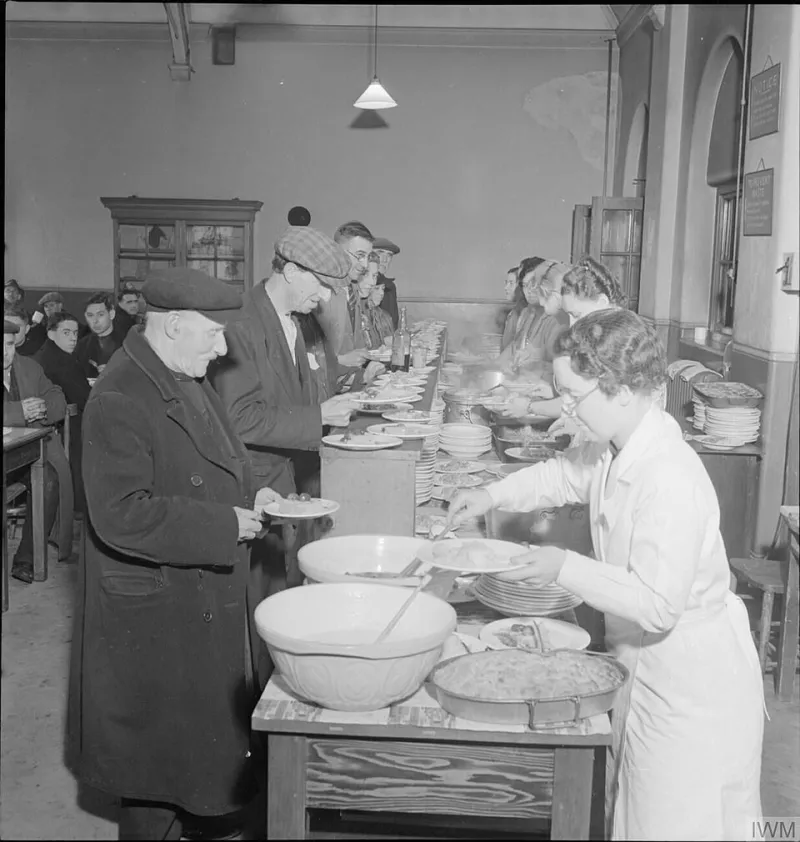
Photo: Ministry of Information Photo Division Photographer, Public domain, via Wikimedia Commons
A Number Stuck in Another Era
In 1991, the average price of a movie ticket was $4.21. A gallon of gas ran about $1.14. And Congress set the federal tipped minimum wage at $2.13 an hour — a number that, unlike almost everything else from that year, has never been updated.
Thirty-plus years later, that figure remains the federal floor for tipped workers: servers, bartenders, valets, nail technicians, and anyone else whose pay is legally allowed to be supplemented by customer gratuity. Employers are technically required to make up the difference if tips don't bring a worker to the standard federal minimum wage of $7.25. But enforcement is uneven, the burden of proving a shortfall often falls on the worker, and the math doesn't always work out the way it should on paper.
For one number to carry this much weight across so many lives, it's worth understanding exactly how $2.13 got here — and why it's so hard to move.
How the Split Happened
The tipped wage didn't always exist as a separate category. The concept of a "tip credit" — allowing employers to count customer gratuity toward meeting the minimum wage — developed gradually through 20th-century labor law. The logic was that tipped workers in busy establishments could earn well above minimum wage through tips alone, so requiring employers to pay the full minimum on top of that would be redundant, or even harmful to the restaurant industry.
By the time the Fair Labor Standards Act was amended in 1966 to formally include tipped workers, the structure was already baked in: a lower base wage, with tips expected to bridge the gap. The specific $2.13 figure was locked in during a 1996 deal that raised the standard minimum wage while freezing the tipped wage as a political compromise. The restaurant lobby, particularly the National Restaurant Association — sometimes called "the other NRA" by labor advocates — pushed hard for the freeze and got it.
That freeze has held ever since.
What $2.13 Looks Like on the Ground
For people who actually live on this wage, the number isn't abstract. It's the amount that appears on a pay stub before taxes — sometimes resulting in a check for literally zero dollars after withholding, because the IRS taxes servers on estimated tip income regardless of what they actually received on a given shift.
"There are weeks in January, February — slow season — where my hourly check is basically a formality," says one server who has worked at a mid-range chain restaurant in Tennessee for four years. "Everything depends on what walks through the door. And when nothing walks through the door, you're doing the math in your head all night."
That volatility is one of the most consistent complaints from tipped workers across the country. Income swings wildly based on weather, local events, economic conditions, and the simple randomness of who happens to sit in your section. The $2.13 base provides almost no cushion against a bad night, a bad week, or a bad month.
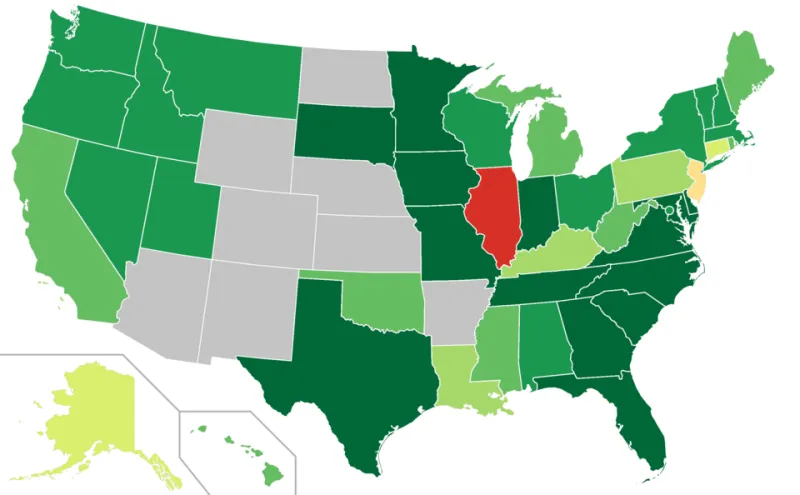
For workers in states that have eliminated the tipped wage — California, Washington, Oregon, Minnesota, and several others pay tipped workers the full state minimum wage — the experience is measurably different. Research from the Economic Policy Institute has found that poverty rates among restaurant workers are significantly lower in states without a tip credit, and that tip income in those states remains comparable to tip-credit states, undermining the argument that higher base wages would cause customers to tip less.
The Restaurant Industry's Counterargument
Opponents of eliminating the tipped minimum wage — and the restaurant industry has been the loudest and most organized among them — make a case that's more nuanced than pure self-interest, even if self-interest is clearly part of it.
Their argument runs roughly like this: labor costs in restaurants already operate on thin margins, typically 3 to 9 percent profit. A sudden jump in base wages for all tipped workers would force price increases, reduce staff, or both. Small, independent restaurants would be hit hardest. And top-earning servers in high-volume fine dining spots already make six figures in tip income — mandating a higher base wage for them doesn't address poverty, it just restructures compensation for people who aren't struggling.
There's also the cultural argument: tipping is embedded in American dining culture in a way that doesn't exist in most other countries. Eliminating the tip credit, some restaurateurs argue, would put pressure on a system that customers have accepted for generations without actually replacing it with something better.
Both sides have data, and both sides cherry-pick it. The actual economic picture — as is usually the case — is more complicated than either talking point suggests.
The Political Calculus of a Frozen Number
So why hasn't Congress moved on this in over thirty years? The answer is a combination of lobbying power, partisan gridlock, and the particular difficulty of changing something that affects a large, geographically dispersed, and politically underrepresented workforce.
Tipped workers skew female, skew younger, and are disproportionately workers of color. They're also largely non-unionized, which limits their collective bargaining leverage and their political organizing capacity. The National Restaurant Association, by contrast, is one of the most well-funded lobbying operations in Washington, with deep relationships on both sides of the aisle.
Every few years, federal legislation to raise or eliminate the tipped wage gets introduced and goes nowhere. The Raise the Wage Act has been proposed multiple times without passing. Meanwhile, the action has shifted to states, where 43 states now have tipped minimum wages higher than the federal floor — some substantially so. In states like New York and California, the gap between the federal $2.13 and the actual local rate is so wide that the federal figure is almost meaningless in practice.
But in states that stick to the federal floor — concentrated largely in the South and parts of the Midwest — $2.13 is the real number that shapes real lives.
One Number, Two Americas
At its core, the $2.13 debate is a geographic story as much as an economic one. Where you live determines whether this number is a historical relic or your actual daily reality. A bartender in San Francisco earning the California minimum of $16 an hour plus tips is living in a functionally different labor market than a server in Mississippi earning $2.13 plus whatever the dining room delivers.
That divide — encoded in a single, frozen federal statute — is one of the starkest illustrations of how numbers don't just measure economic reality. They shape it. They decide who has stability and who doesn't, who can plan ahead and who spends every shift doing mental math about whether the rent is covered.
Every number tells a story. This one has been telling the same story for thirty-four years, and a whole lot of people are still waiting for the next chapter.